Changing Busses Life can change in an instant without anybody even realizing it in the moment. When you look back on a certain time you realize that one part of your life seemed bright, vibrant, and happy; but soon morphed into a dim, dull, and dissatisfying. For me this realization of what life truly offers was when I entered my Middle School bus. At the time I was 12 years old in between being a kid and becoming an adolescent. The day started the same as any other day but soon I would face a new way of life that would soon become the routine that would repeat and imprison me for the following year. The tiny desk fan next to my face blew a cool breeze on my face as I slowly arose from a deep slumber that would be rudely interrupted by the loud, screeching, ear numbing sound coming from my alarm clock. I sluggishly drag myself out of my cozy and very messy bed that was sometimes impossible for me to remove myself from. I walk down my old creaking stairs and arrive at my kitchen where I spent countless hours in my life in order to attempt to relieve the huge appetite of a growing boy. My parents would always say to me that I was like a cow because the amount of food I would eat would require four stomachs to hold. I quickly ate some food, hopped in the shower, got dressed, and finally got ready to leave for my first day of middle school, little did I know a lot was going to be changing.
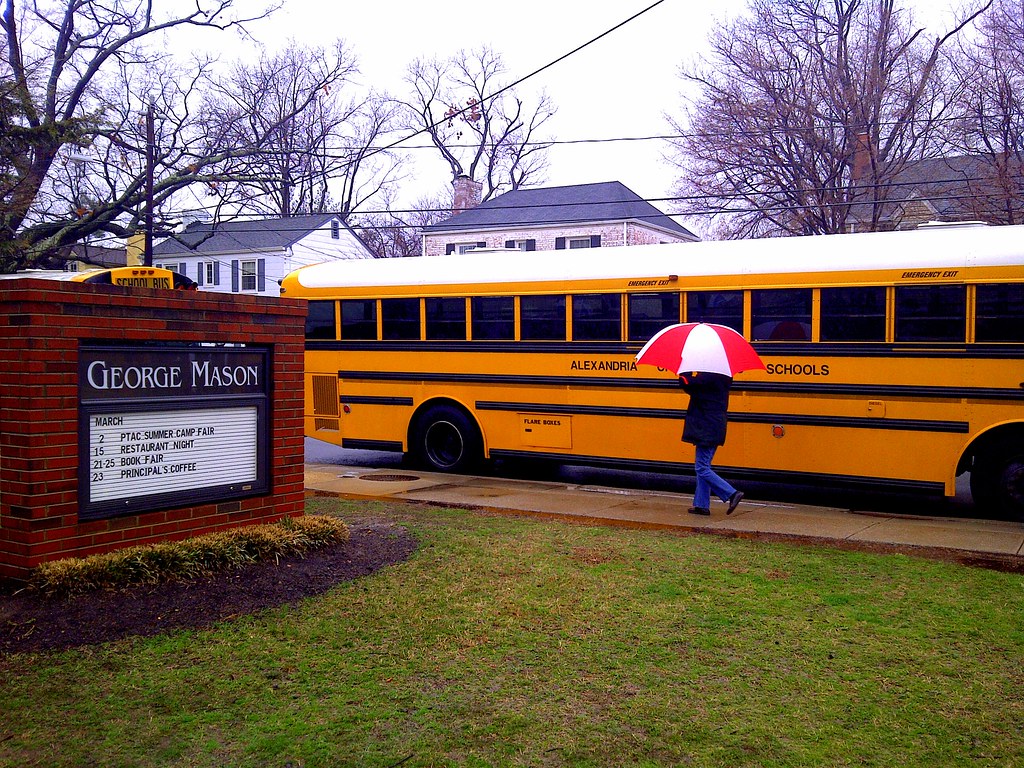
The first thing to change would be the walk to the bus stop. No longer would my parents escort me to the bus that would lead me to my long lasting, dispiriting day, instead I would walk the path alone. It was an overcast dull monday morning, the clouds covered the sun, the walk was quieter than I could ever remember it being, the whole day felt very dreary. The bus I rode changed. Before middle school the bus was vibrant, you were greeted with a friendly “good morning!” from the bus driver which would put a smile on all of our faces. The smell of fresh lavender introducing our noses with the tingling pleasure of its scent. Screaming and hollering of excitement of us kids being taken to the one place where we could interact with each other and enjoy ourselves while we are educated but, most importantly sent to the playground. However, once I started middle school the bus turned into a place of sorrow and dread. Every time my new bus driver would speak it was as if his own voice was fighting against him. The groaning and croaking of his voice was as if there were a literal toad stuck in his throat, so when he talked to you he came off as very rude and uninterested. The bus had a musty smell of old decomposed food which stained the floor and windows, the stench of cigarettes were seeped into the cheap ripped up leather that we sat on, and finally the strong smell of axe body spray that migrated from the back of the bus. The front of the bus was filled with kids similar to me who were anxious to start their first days of middle school, and were tempted to leave the bus and to not go to school. And while the new kids were in the front of the bus the upperclassmen were posted in the back of the bus where they messed around cussed at each other, made fun of one another and other people who weren’t even there. This introduced to the new culture that would surround me for the next year.
My Bus stop in elementary school was one of the first stops, this would change in middle school, my stop changed to the last stop in the morning. This meant that the bus was filled, except for a seat towards the back of the bus. And so I had to take the long walk to row 14 of 21 of the bus. As I walked to the back of the bus everyone would give a quick glance in my direction as I moved one foot in front of the other to reach my seat. As soon as I reached my seat my perspective of middle school changed. I was right next to all of the older kids they were all around age 14 and 15. And well me being the only kid back there I was made a target for humiliation. They started to make fun of me for no reason. They would tease me, ask questions that I wouldn’t know how to respond to and would make me jumble my words together and frantically try to think of something. They would call me names causing me to become very sad and quiet, which was a change from the happy and loud kid that has run in the hallways and gotten in trouble in elementary school. These kids could see the hurt in my face when they would say things, but that didn’t stop them, that was exactly what they wanted. This didn’t just happen on the bus this continued in school, there was no escape, and it felt horrible.
No longer would I walk the halls of school with my friends next to me smiling and joking around. I wouldn’t get to throw paper airplanes at my friend in english class and have him write something on it just to then throw it back at me and watch me laugh in the middle of class as I read his snarky comment. There wouldn’t be any more recess for me and my friends compete against each other in all sorts of different games. I wouldn’t come home anymore excited to finish my homework so I could go outside to play or to play xbox with my friends. I shut down for all of 6th grade really. I became very shy, I wouldn’t talk to people unless they talked to me first, and even then I wouldn’t have the confidence to give actual responses. My whole personality and feelings had changed. 5 years, it took me 5 years to finally break out of my shell that I had been forced inside of. Constantly having the feeling that people were glancing in my direction, judging and getting ready to lash out on me and make fun of me. However, I finally came out of that mindset and feel like a stronger person because of it. And maybe if I had gone to a different school then these changes wouldn’t have happened, but they did and because of them I can look back on them and realize that change can be good in the long run.
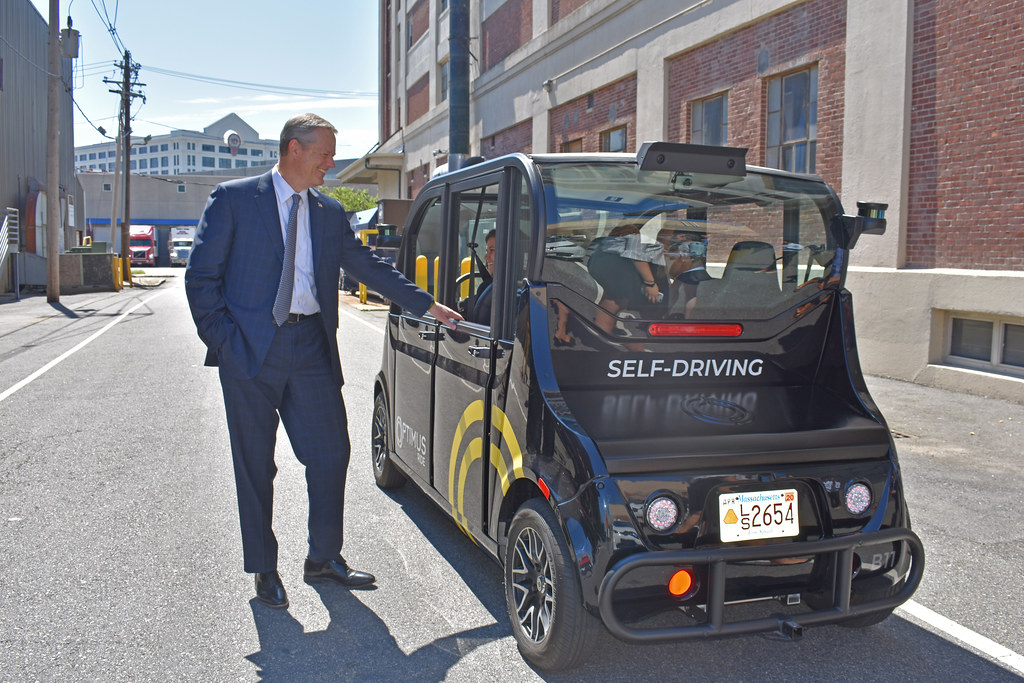
The Failing Promises of Autonomous Driving How do blind people drive themselves to the store? Well, there is no way for them to do this, however with the idea of self-driving cars slowly becoming reality, they now have hope for the future. According to the author Ashley Nunes, who wrote “Self-Driving Cars: Should Automated Cars Be the Future of Transportation” in 2019 in USA Today, self -driving cars are not sustainable in our economy and is not a realistic outlook for the future. With Nunes credibility already built, he uses facts and statistics, and emotional points that will make the reader think about the future of automated cars, however his lack of playing with the readers’ emotions leads to a less impactful article. The history of self-driving cars first originated in the 1920s when the Houdina Radio Control Company showed that a car could drive through traffic if it was given certain instructions. In 1939 researcher Norman Bel Geddes envisioned a fully automated highway system that would change the way road systems work. Some experiments were made but an automated road system made little to no progress for 20 years. In the 1960s researchers realized that cars would have to become smarter and then the road system would have to be. The engineers at Stanford in 1960 were the first to make a self-navigating machine that didn’t need a human to direct it. And now in the 21st century, many advancements have been made to make cars self-driving. With massive businesses such as Uber, Lyft, Tesla, Google, and more all trying to make the first self-driving car, the future of autonomous driving is now looking better than ever before. The development of self-driving cars has been a long road, and the idea has largely been seen as unrealistic, but with the advancement of technology, the future of self-driving cars is looking better than ever. From the beginning of the article, we can tell that it’s going to be a very credible source and appeal to ethos to support his argument. Using ethos boosts Nunes’s article by supporting his main points and reaffirming that these aren’t facts that have been created. As soon as the article is viewed the reader can instantly notice that this source is credible. This is because it has been published by USA Today. USA Today has been around since 1982 and since then has been known to be a very credible source of information, they check the information that is published to ensure that everything is correct. In addition to this, the author Ashley Nunes is a researcher at the Massachusetts Institute of Technology and is also a research associate at Harvard Law School. Nunes has been published on multiple credible sources and is well known in the technology industry. All in all the article can be described as very credible having strong ethos, but Nunes doesn’t just have a strong appeal to credibility he also has strong facts to prove his point. In addition to appealing to ethos, Nunes also appeals to logos which gives the readers facts about the topic. Nunes takes the information that the general population knows and uses it to support his point. In his USA Today article, “Self-Driving Cars: Should Automated Cars Be the Future of Transportation” author Ashley Nunes says “Their biggest expenses? Driver salaries. In the first quarter of 2018, Uber ranked in $11.3 billion in revenue, more than $8 billion of which was spent on paying drivers”(Nunes 1). Nunes uses this to start to talk about the expenses of having people work for a company instead of computers doing the work for them, making it seem like he is on board with self-driving cars. However, he then follows up with “For one thing driverless does not mean humanless. Machines are after all imperfect. They stumble just like humans do …the results can be deadly.”(Nunes 1)Companies such as Uber and Lyft are pouring money into self-driving cars to save money on paying people to drive cars. However, Nunes is stating that a human will always need to be in the vehicle to ensure that the passenger arrives safely to their destination. This takes away Uber and Lyfts dream of saving money. The contrasting statements and the reasoning for these contrasts build a strong appeal to logos and tells the reader that autonomous driving may never happen. Not only does the article have strong appeals to ethos and logos, but it also uses pathos throughout the article. Using strong forms of pathos will make the reader connect to the article more than without it, so Nunes attempts to use it as much as possible. Nunes’s article has pathos scattered around in the article in a way that is subtle but noticeable to someone who is moved by it. For example “But when algorithms charged with our safety and security follow suit, the results can be deadly”(Nunes 1). Dying due to the failure of a computer running poorly would be a horrible thing to happen to someone. He also says, “Why buy a slice of (robo) transportation for $6 when you can pay significantly less in a regular car?”(Nunes 2). Money is one of the biggest factors in someone’s life, and saving it is a priority. So, stating that self-driving cars could not only be deadly but also more pricey than buying a car and driving yourself, opens the readers’ eyes to the reality of self-driving cars, and the lies that some companies have been saying. To conclude, connecting with the audience emotionally helps the author explains his point further and makes it seem more believable.
Nunes informs the reader throughout the article that autonomous cars are not going to be sustainable, he does this by having strong credibility and facts, however, doesn’t seem to draw the reader in with emotion. A lot of people believe that autonomous cars are going to be the next big innovation and will change the world, this may be true but, the expectations people have for this are too high and cannot be met. However, the world will progress, technology will advance, people’s expectations will change, and when all of these occurrences happen then the future of autonomous driving may be brighter. Humanless cars may not occur anytime soon, however, blind people can still rely on Uber and Lyft to transport and help them.
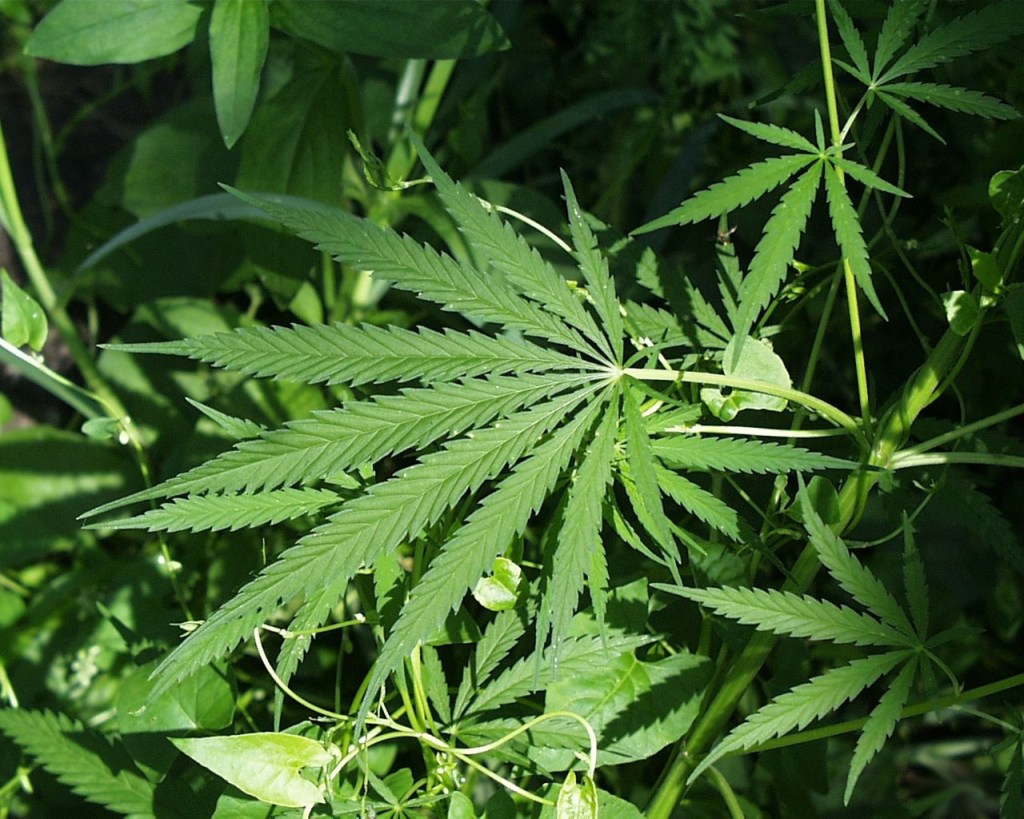
The idea of marijuana legalization has been a hot topic for years now. In the past society completely disregarded the possible positive effects of marijuana legalization and stated that it is an addictive drug that should be outlawed. However, in recent years society has discovered that marijuana is not as bad as most assume that it is. Scientists have proven that marijuana is not the “devils lettuce”, and can have many positive effects. Although, some still say that marijuana is an addictive drug that is causing people to die. Some states have legalized marijuana recreationally but many states are still deciding if the positives outweigh the negatives, with this do the negative effects of marijuana outweigh the positive impact that marijuana has in states where marijuana is legalized recreationally?
The Positive Effects of Marijuana
Marijuana legalization would open up a wide array of businesses within the U.S. which in return will provide tax revenue to the U.S. There has been numerous cases in which making marijuana recreational has brought a state excellent economic growth. The article titled “Marijuana: Should the United States Legalize Marijuana?” states that “Legalization puts an end to the unwieldy costs and injustices caused by prohibition, they contend, and generate sorely needed tax revenue and economic growth in the process” (Issues & Controversies 2 ). The article suggests that legalizing marijuana would have two major economic factors. The first suggestion made was legalizing marijuana would indefinitely end the costs of prohibiting marijuana, in return, freeing up vital resources. The second suggestion points out that with the influx of business and the regulation given by the government, the US. would gain much needed tax revenue and grow the economy. To further prove the idea of economic growth in the article “The Economic Benefits of Legalizing Weed” the author Krishna, Mrinalini reports “…the benefits to the economy could be exceptional: a report from cannabis analytics company New Frontier suggests that federally legal pot could generate an additional $131.8 billion in aggregate federal tax revenue by 2025.”(Mrinalini 2). The author points to the future of marijuana legalization by identifying the amount of money that legal marijuana distribution could generate. With sin tax being put onto marijuana, due to it being considered to be harmful by the government, the price of tax for purchasing this item would be increases. This means that marijuana would generate more income than say a burger due to the tax on burgers being less than products with sin tax. With the upsurge of marijuana businesses that would be created, the demand for workers would also increase. In fact, the author Mrinalini announces that “The ICF study estimates at least 81,000 additional direct, indirect and induced jobs in California as a result of legalized marijuana sales. It also projects an increase in total labor income by at least $3.5 billion.”(Mrinalini 3). The author confirms that recreational marijuana can have a huge effect on the job market, additionally lessening the unemployment rate within America. In doing so, hard earned money can then be put back into the economy due to more people being in the workforce, therefore spending their money. With all of this considered, the U.S. could see a massive influx in the economy due to federal legalization. The statistics given above only represent the state of California. Many other states have seen massive growth in their job markets. These states include; Nevada, Colorado, Illinois, Oregon, and Washington. All in all marijuana legalization could assist America’s economy by growing the job market and offering billions of dollars in tax revenue. Legalization would put a huge dent in the national unemployment rate, which could then lower the poverty rate, which allows our economy to expand. Therefore federal legalization of marijuana could positively benefit every citizen of the U.S.
The benefits of federally legalizing marijuana have been identified, but what are the consequences that the illegalization of marijuana is having on the economy? The economic effect of prohibiting marijuana is greatly damaging to our economy, costing the government millions of dollars a year to try to taper the increasing use of marijuana. The popularity of weed has drastically expanded across america and the police have not been able to keep up with marijuana possession arrests. Author John Mckay in his article “Marijuana Prohibition Is a Poor Policy That Needs to End” notes that “Law-enforcement agencies are simply not capable of interdicting all of this pot and despite some successes have not succeeded in thwarting criminals who traffic and sell marijuana”(Mckay 113). Mckay writes that the use of weed has increased too much for the police to keep up. As seen in Figure 1 there has been an increase of arrests related to marijuana possession which is greatly damaging the economy.
To show how much money is being spent on marijuana possession arrests, in the article “Weed Prohibition Costs Americans Millions” author Elise Lavalee reveals that “According to a 2012 study from Harvard economist Jeffrey Miron, full marijuana legalization would save the United States more than $13 billion a year”(Lavalee 1). The author remarks on the fact that due to prohibiting marijuana there is $13 billion worth of taxpayers money that is being used on people being put on probation, parole, and serving jail time due to a drug that has little evidence of harm. The U.S. government could use this money to improve the education system, fix broken roads, provide more food services,build more homeless shelters, and improve many other forms of public services. Not only does the government save approximately $13 billion dollars a year with the extermination of prohibiting marijuana, but they also gain money from the expansion of businesses. All of this means that more money can be put into expanding other parts of this country that need reforming.
The Negative Effects of Marijuana
The legalization of marijuana can benefit the economy but there are two sides to every story. Marijuana is no different from any other substance legalized in America. The positives of legalization also bring negatives that can affect our economy. When discussing the effects of marijuana in society, the article “Legalizing Marijuana Would Have Many Negative Effects” written by author McKay states the following “…healthcare costs would rise and productivity would suffer. Legal alcohol serves as a good example: The $8 billion in tax revenue generated from that widely used drug does little to offset the nearly $200 billion in social costs attributed to its use”(McKay 100). Mckay draws a connection between marijuana and alcohol. Both are drugs that are socially used by people. The author demonstrates that despite the amount of tax revenue that alcohol generates for the economy, there is a drawback. The amount of money that is spent on the social costs due to alcohol consumption. Including; drunk driving, medical bills, police enforcement, and other accidents that can happen due to the actions of people under the influence. If federal marijuana legalization was enacted Americans could see an increase in the amount of money spent on social costs. These costs could be caused by the price of treatment centers for marijuana abuser. The author DuPont in the article “Marijuana Prohibition Is Working Well” claims the following “Marijuana was an identified drug of abuse for 57 percent of the individuals referred to treatment from the criminal justice system.”(DuPont 107). The author concludes that a high percentage of people who partake in the usage of marijuana end up in some sort of treatment centers which in return costs the population millions of dollars in taxes, due to the increase in medicare. If marijuana was legalized, the assumption that these number could drastically increase could be argued. There is proof that federal legalization could have this effect. DuPont observes the following “Legalized gambling has not reduced illegal gambling in the United States; rather, it has increased it…Legal gambling sets the stage for illegal gambling just the way legal marijuana would set the stage for illegal marijuana trafficking.”(DuPont 107). Even with the regulation of marijuana, illegal marijuana could still be relevant. In fact it could be even higher due to possible cheaper prices. Unsafe practices could end up putting more people into treatment centers directly increasing the amount of money taxpayers pay. When illegal marijuana is being created, cheap tactics are done to make marijuana grow faster. This is because pesticides are sprayed onto marijuana to help it grow. Inhaling these pesticides can be deadly and end up causing collapsed lungs. With all of this information the federal legalization of marijuana shouldn’t be considered due to the increase in medicare bills, and also the possibility that illegal distribution would increase due to the prices being cheaper.
Not only could the federal legalization of marijuana end up damaging the economy but, marijuana still has evidence of being damaging to smokers. The author Li in the article “Marijuana Use and Motor Vehicle Crashes” tackles the subject by exclaiming “Although marijuana is the most commonly detected non alcohol drug in drivers, its role in crash causation remains unsettled” (Li 1). Those who consume the drug marijuana are statistically proven to have a higher chance of being involved in car crashes. Not only does marijuana use cause an increase in car crashes but there is some evidence that smoking can have harmful side effects.The author Ravi in his article “Associations Between Marijuana Use and Cardiovascular Risk Factors and Outcomes: A Systematic Review”claims “In vitro and animal studies have reported that THC can modulate cannabinoid receptors on human cardiomyocytes and vascular smooth muscles, resulting in ischemia”(Ravi 2). This means that the vascular system has an increased chance of having diseases form. With this information given the conclusion that marijuana is not as safe as most assume can be made. All in all, the blanket statement that marijuana is a safe drug can be dismissed, due to evidence of marijuana damaging the human brain, and the higher chance of car crashes of marijuana smokers.
The Reality of Legalizing Marijuana
When talking about the negatives of federally legalizing marijuana, most arguments assume the behavior of others and providing little evidence of marijuana harming smokers.. Legalizing marijuana nationally will greatly benefit the U.S. because the positives will greatly outweigh the limited negatives.When discussing the possible increase in medical bills, related to pot users, this is under the assumption that society will act irresponsibly with the substance. To use alcohol as an example, there are numerous advertisements and movements to teach the population how to act more responsible while under the influence. The majority of alcohol users are responsible while under the influence. Assuming that everyone is irresponsible under the influence is begging the question. In addition one of the other major views used to promote marijuana illegalization is that legalizing gambling increased the amount of illegal gambling. This is not a fair connection to marijuana. Gambling is not a substance it is a way for people to try to make money. Gambling is addicting but the reason for illegal gambling is due to the amount of money that gamblers can make from it. Marijuana users cannot make money from smoking marijuana. When the prohibition of alcohol was enacted, a lot of gang violence started to appear due to the increase in smuggling alcohol into the country to distribute it. Once prohibition was removed the gangs who were distributing alcohol disappeared and in today’s America, all we see is legal alcohol. With the federal legalization of marijuana something similar could happen. Illegal marijuana would disappear from the scene and the drug could then be regulated by the government, making it a safer activity for the general population. The topic of marijuana being unsafe to consume is not supported with enough evidence making it a weak argument. The author Lopez in the article “Marijuana Is a Relatively Safe Drug – with Some Risks” confirms this saying “Overall, marijuana is a relatively safe drug — certainly less harmful than some of the drugs that are legal today, and potentially beneficial to some people’s health through its medical use.”(Lopez 1). Lopez is arguing that marijuana is one of the safest drugs, if not the safest drug, and in the end can end up having great medical benefits for some users. Most of the arguments made against the legalization of marijuana can be rebutted and proven incorrect. Thus proving the federal legalization of marijuana should be enacted.
Conclusion
Now is the time to take action on the federal legalization of recreational marijuana. The popularity and acceptance of the drug will continue to expand, and soon enough Americas could see massive benefits to the country. These benefits including; more jobs, more money put into the government, and less money being spent on law enforcement. To finalize, the positives of the legalization of marijuana greatly outweigh the negatives.
The Rim Fire in the Stanislaus National Forest near in California began on Aug. 17, 2013 and is under investigation. The fire has consumed approximately 149, 780 acres and is 15% contained. U.S. Forest Service photo.
The Burn
By:Matthew Allen, William Clarkson, Nick Mink, Alejandro
I gave you the leaves, the oceans, the air
I gave you the world but you did not care
I wanted to make you happy but now you have me begging on my knees
Please, oh please! I am about to lose my hair
My amazon forest is burning, you use to preserve me but now that the tables are turning, 7,000 square miles of the forest has been destroyed, It has got me paranoid,
Blazing flames, burning my veins, the clear blue sky has turned into a deep dark fog of ash that cannot be seen through, the clear sky was blue but now it is not in clear view. You want business to boom while these businesses consume my life. The fire has increased by 80 percent, no help was sent my scent vanished, my life has been a long slow descent, not enough has been spent to save me but, the rent is past due, one day I will have to reinvent you.
I gave you the leaves, the oceans, the air
I gave you the world but you did not care
I wanted to make you happy but now you have me begging on my knees
Please, oh please! I am about to lose my hair
You have no respect for my land, the National Geographic has been studying and reporting the icebergs for years, yet no rational solution has been acted on. You believe global warming is a hoax, but soon the waters will meet the coast. You have Greenland, which lost 286 billion tons of ice in 23 years, by 2050 my icebergs will be castaway, possibly leading those in a below sea level environment to meet doomsday, while others live day-to-day while slowly burn my ice away.
I gave you the leaves, the oceans, the air
I gave you the world but you did not care
I wanted to make you happy but now you have me begging on my knees
Please, oh please! I am about to lose my hair
My ozone layer is burning, you should be learning to find an alternative to my fossil fuels
Theses chemicals that harm me have stripped me of my protective layer, allowing harmful UV rays to penetrate and generate more harm to me. Some say fossil fuels are required for transportation to deliver your goods, but all I ask is for you to reduce the damage being done. The burns are greater than ever and if nothing is done soon then I might not be around much longer, my ice caps are now puddles, my forests are now down to rubble and soon the air will be in trouble.
I gave you the leaves, the oceans, the air
I gave you the world but you did not care
I wanted to make you happy but now you have me begging on my knees
Please, oh please! I am about to lose my hair
You do not listen
I sent many to help and show you the problems
But you ignored each one while their warnings glisten
But you say you never saw them
this is your last warning
Clean up your mess or you won’t see the next morning
This semester of college was my first year of college, meaning it was my first semester I would be taking, and it all started with my English class. Freshman year of school is always the hardest year, students go from being at the top of the schools or being “top dogs” to being back to the bottom of the food chain. With this transition a lot of skills needed to be learned in order for me to be successful in college. A lot of these skills I learned in English class, learning time management, how to properly critique, different writing styles, and how to properly revise my work.
Coming into college I was always told that attending classes is something that the teacher isn’t going to make you do, but it is something that you yourself will have to make yourself do. My attendance throughout my first semester was nearly perfect, and thankfully so. Only missing a couple days caused me to fall behind in classes due to college constantly moving without remorse for those left behind. This is due to the amount of in class work that is done and the amount that is graded. This includes group work, group discussions, writing exercises, peer reviewing, and more. Missing these crucial in class work stopped me from being able to learn, and caused me to have to play catchup for the next week. Almost every assignment we do in class needed my participation in order to gain a deeper understanding of the topic at hand. In class assignments were not the only schoolwork that needed to be done, there was homework and quizzes that needed my attention. Personally doing school work at home has always been beneficial to me, it causes greater productivity and time management and so with all of the homework I could put 110 percent into doing it. With the split between going to school and doing work there and also doing homework back at home one of the major things I had to learn was how to manage my time better. Procrastination wasn’t allowed anymore if I were to procrastinate then work wouldn’t get done and then I would fall behind and end up having to drop my classes. I used to put off all of my school work to the last second, but this is not possible in college. I noticed that doing homework as soon as I got home actually furthered my knowledge on the topic possibly due to the information being fresh in my brain. In addition to this double checking my work furthered my understanding on the topic at hand. Chiefly, double checking or revising my essays caused me to notice all of the silly mistakes I make making it so in my future writings I don’t make those mistakes and ultimately become a better writer because of it. One of my personal best writing works to this day would have to be my argumentative essay that I wrote in English class. It made me come to the realization that not only was my word choice slowly becoming greater but also my in text citations were close to perfection for the first time in my writing career. What I have noticed not just in the argumentative essay but in all of my writing work is that my grammar needs some definite improvement. I have run on sentences a lot, grammar issues, and how I structure some sentences needs to improve as well. The three main essays that I noticed in these flaws also taught me numerous lessons in writing. In my personal essay I wrote this “maybe if I had gone to a different school then these changes wouldn’t have happened, but they did and because of them I can look back on them and realize that change can be good in the long run”. My personal essay taught me how to look back on my past and evaluate myself. How to remember how I felt back then and to note how far I have come in life. In my Rhetorical Analysis essay I learned how to properly identify ethos, pathos, and logos. “From the beginning of the article, we can tell that it’s going to be a very credible source and appeal to ethos to support his argument”, this is a quote from my rhetorical essay that shows how I can identify ethos, logos, and pathos. Despite this, my understanding of ethos, logos, and pathos is still not up to par with others and I wish that I could’ve had more instruction on it. Finally in my argumentative essay I learned how to not only defend my viewpoint on a topic but to also explain the opposing viewpoint. In this quote I am able to put myself in the opposing view and successfully explain it “If federal marijuana legalization was enacted Americans could see an increase in the amount of money spent on social costs”. All in all my college experience so far has made me realize that I am an adult now and taking responsibility for my actions is imperative.
I started this semester not knowing what to expect, I was simply a scared freshman being introduced to a much bigger world that I have never experienced. And because of this I had numerous obstacles to overcome, and ultimately I have become a better student. To conclude my last English essay I would have to say that this class has made me a better writer and made me realize that not only am I ready for any college essay that is thrown at me, but I also realize that I can overcome any obstacle in my path.
This is an example post, originally published as part of Blogging University. Enroll in one of our ten programs, and start your blog right.
You’re going to publish a post today. Don’t worry about how your blog looks. Don’t worry if you haven’t given it a name yet, or you’re feeling overwhelmed. Just click the “New Post” button, and tell us why you’re here.
Why do this?
Because it gives new readers context. What are you about? Why should they read your blog?
Because it will help you focus you own ideas about your blog and what you’d like to do with it.
The post can be short or long, a personal intro to your life or a bloggy mission statement, a manifesto for the future or a simple outline of your the types of things you hope to publish.
To help you get started, here are a few questions:
Why are you blogging publicly, rather than keeping a personal journal?
What topics do you think you’ll write about?
Who would you love to connect with via your blog?
If you blog successfully throughout the next year, what would you hope to have accomplished?
You’re not locked into any of this; one of the wonderful things about blogs is how they constantly evolve as we learn, grow, and interact with one another — but it’s good to know where and why you started, and articulating your goals may just give you a few other post ideas.
Can’t think how to get started? Just write the first thing that pops into your head. Anne Lamott, author of a book on writing we love, says that you need to give yourself permission to write a “crappy first draft”. Anne makes a great point — just start writing, and worry about editing it later.
When you’re ready to publish, give your post three to five tags that describe your blog’s focus — writing, photography, fiction, parenting, food, cars, movies, sports, whatever. These tags will help others who care about your topics find you in the Reader. Make sure one of the tags is “zerotohero,” so other new bloggers can find you, too.